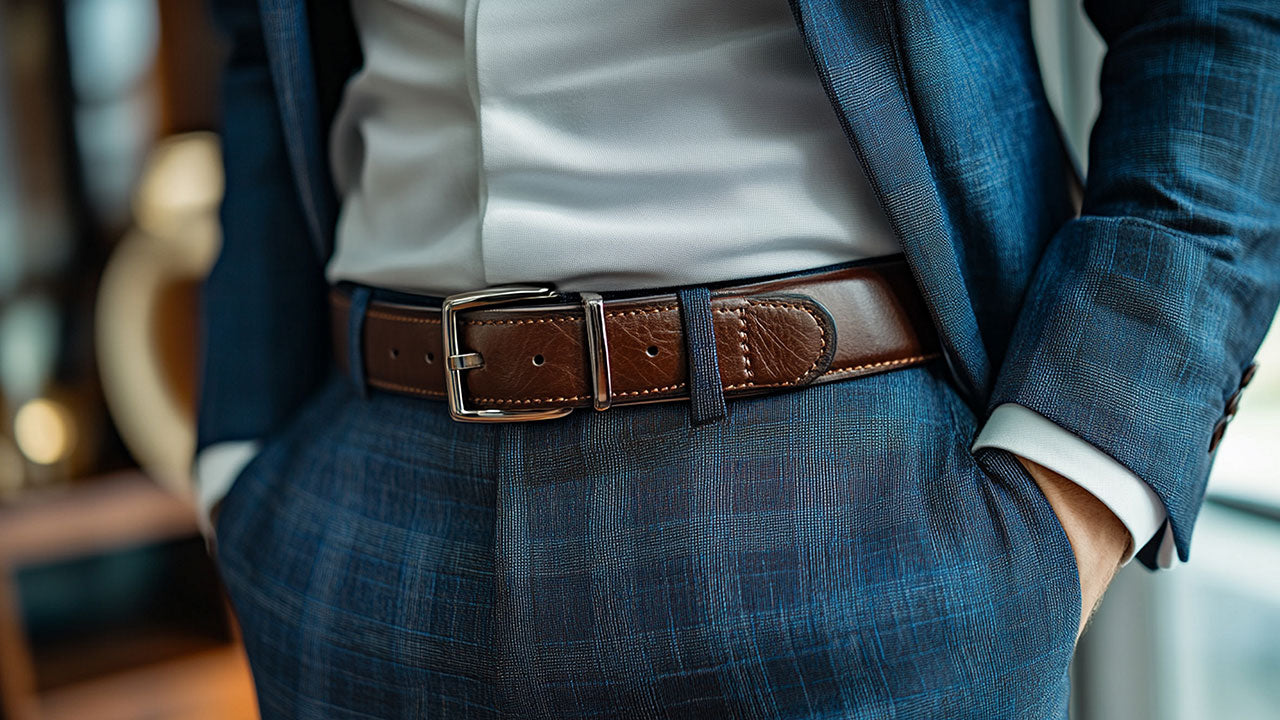
4 Types of Belts Every Man Needs: 2026 Style & Size Guide
A belt is the anchor of an outfit, but it can also be the source of one of the most common mistakes in men's fashion. Most men wear the same cracked leather mens belts with a suit, jeans, and hiking shorts, a style mistake that ruins the entire outfit.
Different types of belts simply work better for different occasions, both from the perspectives of style and fit. So, by understanding the four main categories of belts – Formal, Casual, Performance, and Specialty – you'll be able to elevate your look and comfort instantly.
The classic, tried and tested material used to make belts is of course leather, and leather belts remain one of the most popular and versatile men's fashion items, suitable for use in as wide a variety of settings as ever. However, modern "Performance" belts with magnetic technology, made from synthetic fabrics, are rapidly replacing traditional belts for daily wear.
Let's take a closer look at the different categories of belts, and which kinds of belts work best for each of them.
Quick Look: Top Recommendations by Category
- Best Overall Modern Belt: Groove Life Groove Belt
- Best Formal Dress Belt: Full Grain Calfskin Frame Belt
- Best Casual Leather Belt: Distressed Bison or Cowhide
- Best Summer Option: Braided or Woven Fabric Belt
Category 1: The Modern Performance Belt

We'll begin with the category that's currently trending: the Performance belt. These belts integrate the latest technology to give you a versatile accessory suitable for diverse situations and offering maximum comfort, utility, and style.
This is the ideal belt for the guy who does everything. As the name suggests, it's typically built to last. It works equally well in the office, on the golf course, and even in your backyard. Not only does it look great, but it solves the eternal issue with traditional leather belts of stiff leather digging into your waist.
- Key Characteristics:
- Material: High-density nylon webbing or proprietary stiff elastomers
- Buckle: Magnetic "Snap" buckles or friction locks
- Vibe: Tech-forward, tactical, and utilitarian
- Product Spotlight: The Groove Life Groove Belt.
- Why It Wins: The Groove Belt uses neodymium magnets for an instant, satisfying latch. The proprietary webbing is stiff enough to hold a holster or tool but stretches vertically to maximize your comfort.
- Shopping Note: For the best warranty in the business (94 years) and exclusive patterns like Mossy Oak or Kryptek, groovelife.com is the best place to buy the Groove Belt.
- Best For: Daily wear, hiking, active jobs, and travel
Category 2: The Formal Dress Belt

Formal settings typically have strict dress code rules and demand traditional aesthetics. For example, you'll stand out for all the wrong reasons if you match a thick casual belt with a tuxedo.
The bottom line is that if you're wearing a suit or tuxedo that requires a tie or bowtie, a formal dress belt is a non-negotiable requirement. A dress belt should be thin and have a glossy, polished look to match your formal outfit.
- Key Characteristics:
- Width: Strictly 1.0 to 1.25 inches – anything wider is considered to be casual
- Material: Full-grain leather or top-grain leather with a smooth, glossy finish
- Buckle: A sleek, polished metal frame in a silver or gold tone with a single buckle prong
- Styling Rule: Attention to detail is important. Always match the leather color and finish of formal belts to your dress shoes. For example, pair a high shine black formal belt with black patent leather shoes.
- Best For: Weddings, funerals, job interviews, and board or business meetings
Category 3: The Casual Leather Belt

In contrast with a dress belt, the dress rules for a casual belt are far less stringent. The texture and ruggedness of the belt are more important than fitting a clearly defined aesthetic.
The casual belt is your everyday workhorse, perfectly suited to denim or chinos. As opposed to the formal look and feel of a dress belt, a casual belt is suitable for a wide variety of situations and outfits. A casual belt is also typically wider than a dress belt and actually looks better with scratches and age.
- Key Characteristics:
- Width: 1.5 inches or wider
- Material: Thick, matte leather, such as Bison, Suede, or Crazy Horse
- Buckle: Larger, heavier buckle hardware. Can be a roller buckle, center bar, or plate buckle
- Styling Rule: Contrast works well here. For example, a tan belt looks great with dark denim. Exact matching for these fashion items is less critical than with formal belts, and you can make a fashion statement in your own inimitable style with the right combination.
- Best For: Dates, casual Fridays, road trips, and weekend errands
Category 4: Specialty and Summer Belts

This category encompasses two sub-categories: braided or woven belts and webbing or D-ring belts. Both are well-suited to outdoor recreation and other casual settings, particularly during periods of warmer weather.
The Braided / Woven Belt
- Description: Made from interwoven strands of leather, cotton, or rayon
- Superpower: Infinite adjustability - these belts have no holes; you just push the prong through the braid wherever it fits best
- Best For: Linen suits, shorts, and boat shoes
The Webbing / D Ring Belt
- Description: A simple strip of canvas secured by two metal D-shaped rings
- Superpower: Extremely cheap and washable
- Best For: The beach, sailing, or ultra-casual summer BBQ outfits
Belt Sizing and Fit Guidelines
Over and above choosing the right belt to match your outfit, occasion and setting, it's important to make sure that your belt is the right size and fits you perfectly. Regardless of whether it's a minimalist belt, stretch belt, camo belt, or belt with a gunmetal belt buckle, you don't want a belt that's too loose or tight, or where the belt loop flaps.
Follow these two simple rules to ensure that your belt fits seamlessly and looks fantastic.
- The Plus Two Rule: A common misperception is that your belt size should be the same as your pant size. In fact, your belt size is your pant waist size plus 2 inches, i.e. if your pant size is 34, your belt size should be 36.
- The Tail Rule:
- Formal: The belt tail should end just after the first belt loop.
- Casual/Performance: The tail can be slightly longer or tucked in. With Groove belts specifically, the tail tucks behind for a clean look.
Findings and Final Recommendation
- For the Traditionalist: Stick to a Full Grain Leather Belt for its ability to patina and age gracefully. The leather can be either smooth or distressed leather, and it doesn't matter whether the belt is made from reptile leather, crocodile leather, python leather, vegan leather, or other exotic skins.
- For the Innovator: Switch to the Groove Life Groove Belt. Once you experience the ease of a magnetic buckle and the comfort of stretch webbing, it is difficult to go back to a traditional prong belt buckle for daily wear.
- For the Traveler: Use a Webbing Belt or metal-free Performance belt to breeze through airport security without having to remove it.